
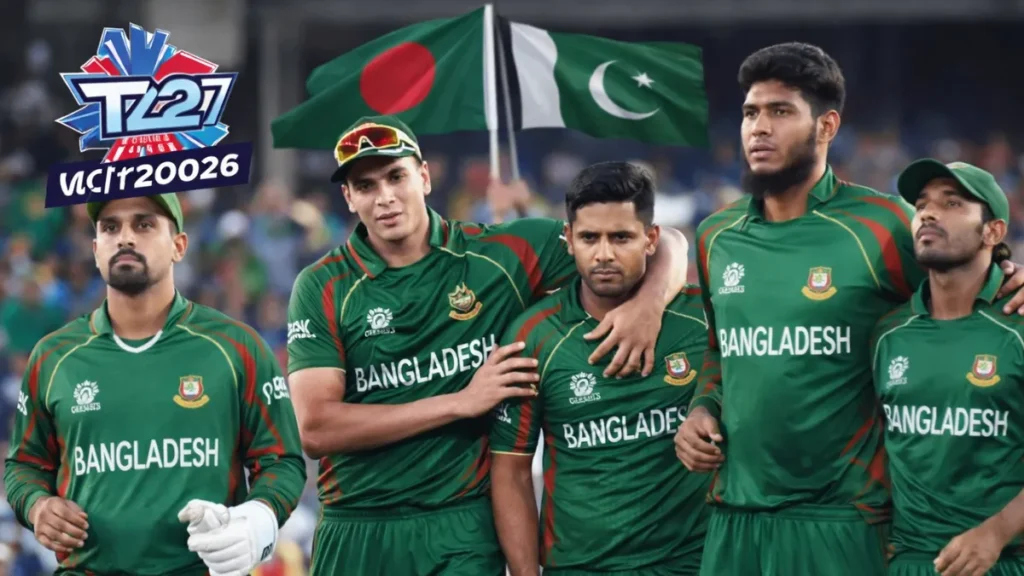
Bangladesh cricket news has taken a dramatic turn ahead of the ICC T20 World Cup 2026, as Bangladesh has reportedly reached out to Pakistan for diplomatic and cricketing support amid its ongoing standoff with India. The situation has escalated to such an extent that Pakistan may now reconsider its own participation in the tournament if Bangladesh’s concerns are not adequately addressed, according to sources familiar with the matter.
This unexpected development has added a fresh layer of complexity to what was already shaping up to be one of the most sensitive crises in modern international cricket. With the tournament scheduled to begin on 7 February 2026 and co-hosted by India and Sri Lanka, the International Cricket Council (ICC) now finds itself under immense pressure to broker a resolution before the situation spirals further out of control.
Background: Why Bangladesh Refused to Travel to India
The current impasse began when the Bangladesh Cricket Board (BCB) formally informed the ICC that it was unwilling to send its national team to India for its T20 World Cup matches. The BCB cited security concerns, despite an ICC-commissioned security assessment reportedly concluding that there were no specific or immediate threats to the Bangladeshi team.
From Bangladesh’s perspective, the issue goes beyond cricket alone. Officials in Dhaka have expressed unease over the broader diplomatic climate between the two countries, which has deteriorated noticeably over the past several months. The BCB’s stance has remained firm, even after high-level discussions with ICC representatives.
In a carefully worded statement released after talks with the ICC, the BCB said it would “continue engaging in constructive dialogue” but stopped short of committing to playing matches in India. This cautious language signaled that Bangladesh was not prepared to back down without concrete assurances.
Pakistan’s Role: A New Power Dynamic Emerges
According to sources, the Bangladesh government has now approached Pakistan at both diplomatic and cricketing levels to seek support in its dispute with the ICC and India. Islamabad’s response, described as “positive,” has significantly raised the stakes.
One source told NDTV that Pakistan has conveyed to Bangladesh that it could reconsider its own participation in the T20 World Cup if Bangladesh’s concerns are ignored. While no official statement has been made by the Pakistan Cricket Board (PCB), the mere suggestion of such a move has sent shockwaves through global cricket.
If Pakistan were to take a firm stand alongside Bangladesh, the ICC would face an unprecedented scenario: the possibility of two Full Member nations declining to participate in cricket’s flagship T20 tournament.
Improving Pakistan–Bangladesh Relations Strengthen Solidarity
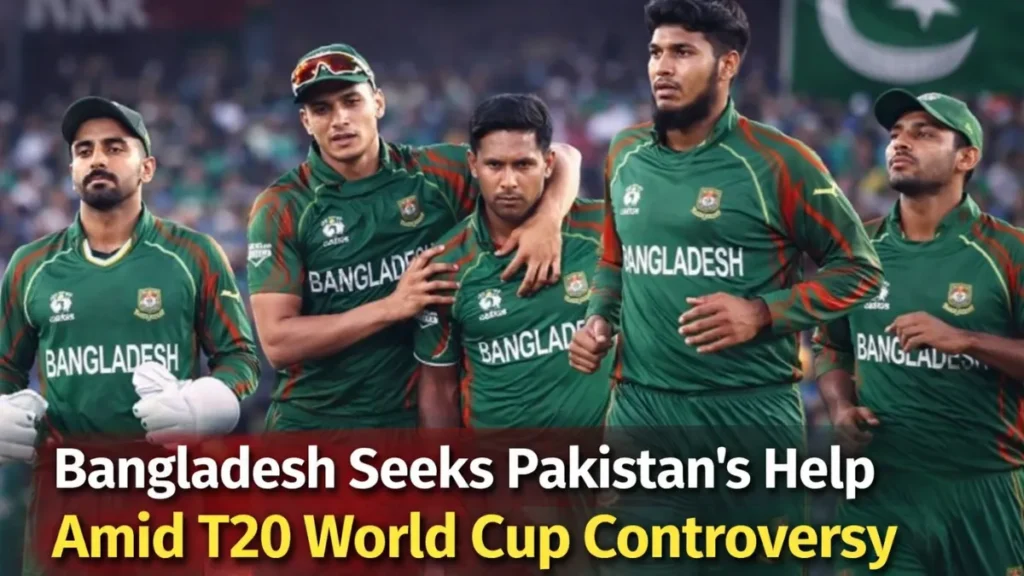
This show of solidarity did not emerge in isolation. Relations between Pakistan and Bangladesh have improved markedly over the past year, both politically and within cricketing circles.
Following the political upheaval in Dhaka last August, which resulted in the removal of former Prime Minister Sheikh Hasina, ties between Bangladesh and India became strained. Hasina fled to India, and Bangladesh’s repeated requests for her extradition have so far gone unanswered. This issue remains a significant sore point in bilateral relations.
In contrast, Pakistan and Bangladesh have found common ground. Cricket administrators from both countries have worked closely in recent months, particularly during last year’s Asia Cup, where cooperation between the PCB and BCB was notably smooth.
PCB chairman Mohsin Naqvi received strong backing from BCB president Aminul Islam, especially during discussions surrounding tournament logistics and governance. Naqvi later returned the favor by supporting Bangladesh’s call for a meeting of the Asian Cricket Council (ACC) ahead of the competition.
These growing ties appear to have translated into political goodwill, which is now playing out on the global cricket stage.
Also read: India Next Cricket Match Schedule 2026: Full Fixtures, Series Details & Match Calendar
IPL Fallout Adds Fuel to the Fire
Another flashpoint that intensified tensions between India and Bangladesh was the release of Bangladeshi pacer Mustafizur Rahman by the Kolkata Knight Riders (KKR) ahead of the IPL 2026 season.
Although KKR did not provide an official explanation, the decision was widely interpreted in Bangladesh as being influenced by deteriorating bilateral relations rather than purely cricketing reasons. Public sentiment in Bangladesh turned sharply critical, with fans and commentators viewing the move as symbolic of broader exclusion.
In response, the Bangladesh government took the drastic step of banning IPL broadcasts in the country. The move sent a clear signal that the dispute had moved beyond cricket boards and into the realm of state policy.
Shortly thereafter, the BCB formally notified the ICC of its decision not to play any World Cup matches in India—a stance it has maintained to date.
ICC Under Mounting Pressure
For the ICC, the situation represents one of the most serious governance challenges in recent history. The organization has spent months attempting to defuse tensions quietly, hoping that diplomacy and compromise would prevail.
However, with Pakistan now signaling potential support for Bangladesh, the ICC’s room for maneuver has narrowed considerably. Any perception that the governing body is unable to ensure the participation and safety of member nations could undermine its credibility.
The T20 World Cup is a cornerstone of the ICC’s commercial and strategic planning. A boycott or partial withdrawal by major teams would not only disrupt scheduling but also have significant financial and reputational consequences.
Possible Outcomes on the Table
Several options are reportedly being discussed behind closed doors:
- Neutral Venues: Bangladesh’s matches could be moved to Sri Lanka or another neutral country.
- Hybrid Model: Similar to previous tournaments, matches involving Bangladesh (and possibly Pakistan) could be played outside India.
- Additional Security Guarantees: India and the ICC could jointly offer enhanced security arrangements to address Bangladesh’s concerns.
- Diplomatic Mediation: Third-party mediation involving other Full Member boards could help broker a compromise.
Each option comes with logistical challenges, but the cost of inaction may be far greater.
What This Means for Global Cricket
From a broader perspective, this episode highlights how geopolitics and cricket are increasingly intertwined. While the ICC often emphasizes that sport should remain separate from politics, the reality is that international cricket does not operate in a vacuum.
The unfolding Bangladesh cricket news saga serves as a reminder that trust, perception, and diplomacy are just as crucial as security assessments and scheduling spreadsheets.
Also read: Women’s Cricket World Cup Schedule 2025: Complete Match Dates, Teams, Format & Points Table
Conclusion: Time Is Running Out
As things stand, the future schedule of the ICC T20 World Cup 2026 hangs in the balance. With the tournament less than a year away, the ICC cannot afford prolonged uncertainty.
Bangladesh has made its position clear. Pakistan’s backing has added weight to its demands. Now, all eyes are on the ICC and the host nations to see whether a mutually acceptable solution can be found.
For now, the clock is ticking—and global cricket waits anxiously for the next move.